

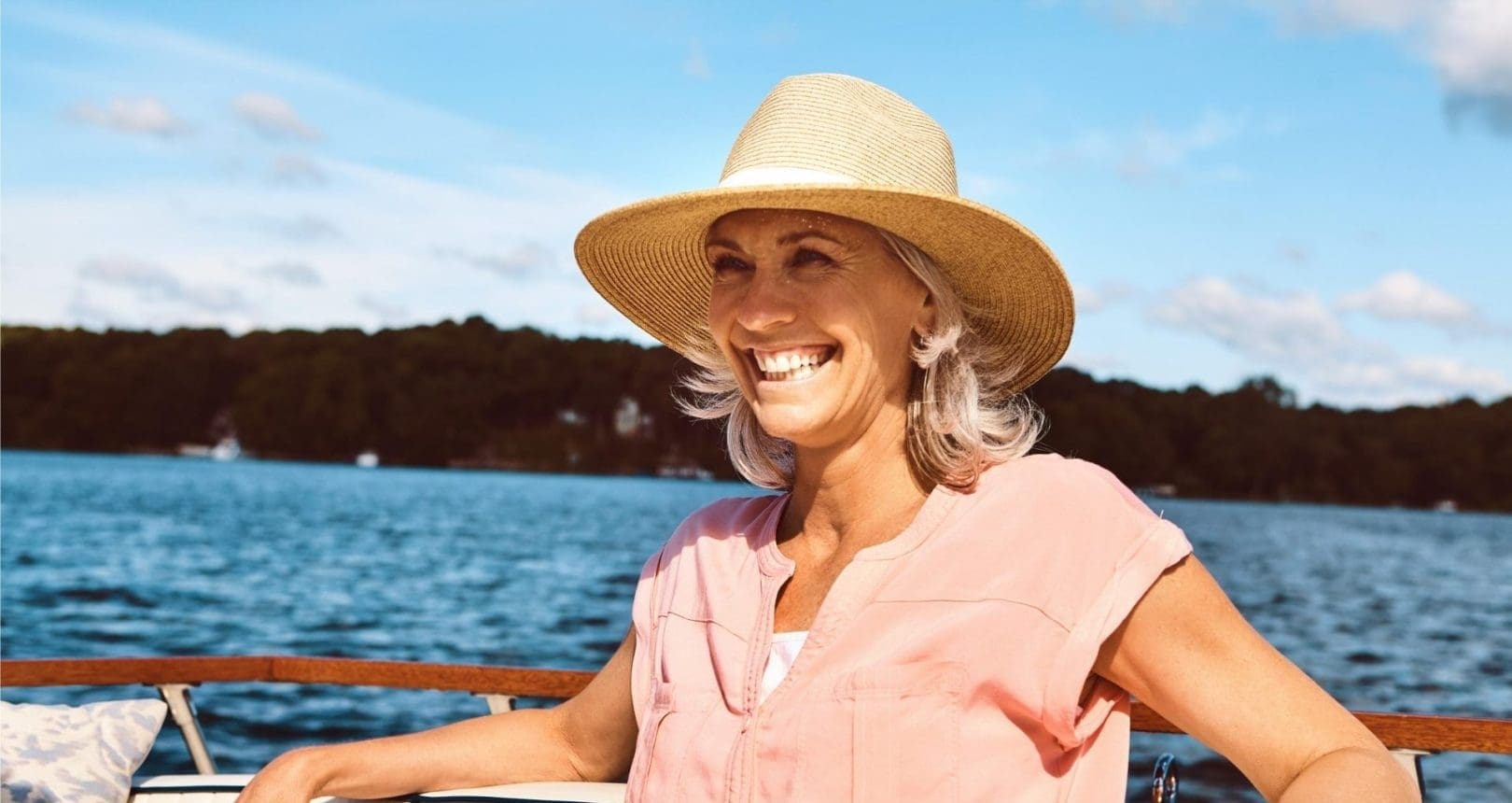
In 2023, the U.S. Surgeon General issued a stark warning: the country faces an epidemic of loneliness. It’s not hyperbole. Loneliness is linked to premature death, stroke, heart disease, depression, and a 50 percent increased risk of dementia. For single women entering retirement, the risk is real and personal.
Yet here’s what few people talk about openly: retirement as a single woman is fundamentally different from retirement as a couple. You’re not just choosing where to live. You’re choosing whether to live alone or build community. Whether to manage a home solo or share the responsibility. Whether isolation or connection defines your next decades.
This is where gated retirement communities change everything. Not because they’re luxurious, though many are. But because they solve multiple problems at once: they provide security for a woman living independently, built-in social infrastructure so you’re not starting from zero when building friendships, and the peace of mind that comes with professional management handling the maintenance headaches couples divide between themselves.
If you’re a single woman considering retirement—whether you’re widowed, divorced, or never-married—this guide walks through how to evaluate communities, what to look for, and whether a place like WindRiver might be the right fit for your independence and your wellbeing.
The Single Woman Retirement Reality
Start with the numbers. About 36 percent of seniors 65 and older are single. That’s more than one in three. For women specifically, the number is higher. Between 27 and 43 percent of women aged 65 to 75 and older live alone, depending on age group. By your late seventies, you’re more likely to be living solo than with a partner.
Who are these women? Some are widows. The United States has 11.4 million widows—roughly 3.5 times more widows than widowers. Some are divorced. The divorced population among retirees has tripled in the past 30 years, from about 5 percent in 1990 to 15 percent today. And some never married, choosing independence throughout their working years and carrying that choice into retirement.
Each path looks different. A widow might be adjusting to a life change after decades of partnership. A divorced woman might be rebuilding after a major identity shift. A never-married woman might be seeking community for the first time without the constraint of managing a joint household.
But they share something: the challenge of building a fulfilling life alone. That’s different from building a life with someone else handling half the responsibilities, making half the decisions, sharing half the social burden.
The financial reality is harder than people acknowledge. According to AARP research, 64 percent of unmarried working women ages 50 to 64 have less than $50,000 in retirement savings. Women’s Social Security benefits average about 80 percent of what men receive. For divorced women especially, retirement income can be tight. Add to that the fact that single women now manage property maintenance, yard work, home repairs, and unexpected costs without a partner to split the bill. Every dollar matters.
And then there’s the health reality. Loneliness isn’t just uncomfortable. It’s dangerous. Social isolation is linked to premature death. It increases stroke risk, heart disease risk, and depression. For every year a woman spends isolated in retirement, dementia risk climbs 50 percent higher than it would for a connected woman the same age. Women live five to six years longer than men on average. That’s five to six years where isolation becomes increasingly costly.
This is why community matters for single women in ways it doesn’t always for couples. It’s not a lifestyle choice. It’s a health investment.
Why Single Women Choose Gated Retirement Communities
Safety comes first when you ask women why they’re drawn to gated communities. Not as an afterthought, but as the primary reason. A single woman living alone has legitimate security concerns that couples simply don’t face. Home burglaries, vehicle thefts, personal crime—these are real risks, and a gated community with controlled access, security staff, and professional monitoring directly addresses them.
But it’s not only safety. It’s also the maintenance-free living that appeals. Single women don’t want to manage a home alone—handling repairs, yard work, snow removal, and the unexpected crises that come with home ownership. In a gated community, professional staff handles landscaping, exterior maintenance, snow removal. That frees you from the burden of managing everything by yourself.
The third major appeal is the built-in social infrastructure. Moving to a new place as a single person is intimidating. Where do you meet people? How do you build friendships? A gated community eliminates that question. You inherit an instant neighborhood. You have access to dozens of clubs, regular activities, and community events. Instead of starting from zero, you’re surrounded by structured opportunities to meet people who share your interests.
And there’s something powerful about professional management. A gated community is run by professional staff. You’re not dealing with neighborhood conflicts, homeowner association drama, or tenant disputes. You’re living in an intentionally managed space where your neighbors are screened residents, not random people. You don’t sit on boards. You don’t mediate disputes. You live in the space and participate in the community as much or as little as you choose.
Safety: The Unspoken Concern
Single women aren’t paranoid about security. They’re realistic. Research shows that rising demand for gated communities is driven “particularly by women, children, and seniors” concerned about safety. It’s rational. It’s grounded in reality.
A gated community with professional security provides layered protection. The gate itself screens who enters—residents and approved visitors pass through checkpoints. Security staff don’t just check people in; they actively patrol the community. There’s no ambiguity. You know the people in your community are residents or invited guests. You know there’s professional oversight.
For a single woman living alone, this peace of mind is invaluable. You can walk to the mailbox without calculating risk. You can sit on your porch in the evening without worry. You can host guests without concern that you’re alone in the house with strangers in the neighborhood. That psychological safety matters as much as the physical security.
Many communities offer additional safety features: emergency call systems in homes, 24-hour staff response, professional fire and safety protocols. These aren’t luxuries. They’re practical safeguards that make life as a single person more manageable and less anxiety-producing.
Social Integration: Making Friends as a Single Woman
The fear most single women express isn’t about the community itself. It’s about fitting in. Will I be the only single person? Will everyone be couples? Will I feel out of place?
The reality is different than it was 20 years ago. About 36 percent of seniors are single now—roughly one in every three people you meet. And increasingly, retirement communities are accommodating singles, recognizing that single residents are a growing demographic.
More importantly, gated communities often have more robust social programming than traditional neighborhoods. Instead of accidentally meeting people at neighborhood events, you have structured clubs and activities. At a place like WindRiver, there are over 100 clubs and social groups. Book clubs, fitness classes, hobby groups, outdoor recreation clubs, dining clubs, volunteer organizations. The variety is intentional—the idea is that every resident, whether single or coupled, finds their people.
For single women, this matters immensely. You’re not relying on chance encounters. You’re not hoping you click with your immediate neighbors. You can join a book club and immediately have access to a group of women who share your interests. You can take a fitness class and build friendships through regular attendance. You can participate in dining clubs and meet people over shared meals. The social infrastructure exists. You just show up.
Research on fitness communities shows that group exercise programs reduce social isolation significantly. It’s the combination of activity plus community. You get healthier while building friendships. For single women, this is particularly valuable—the wellness benefit and the social benefit happen simultaneously.
Most importantly, you choose your level of engagement. You’re not obligated to participate in everything. You can be as social as you want or need to be, knowing the opportunities exist if you want them.
Independence and Community: The Balance That Works
One fear single women express is the opposite of loneliness: loss of independence. If I move to a community, will I lose my autonomy? Will I be managed? Will I have to conform?
The honest answer is: only as much as you choose. In a gated retirement community, you own your home. You set your own schedule. You decide which clubs to join, which activities to attend, which events to participate in. Nobody mandates anything. The community provides infrastructure and opportunity. You decide how to use it.
This balance is different from living with someone else. You’re not compromising on decision-making or negotiating how to spend time. But you’re also not completely alone. You have neighbors. You have professional management handling the maintenance headaches. You have access to community resources and activities.
Many single women describe it as independence with a safety net. You maintain complete autonomy over your life while having the security of community oversight and professional management. If something goes wrong—a medical emergency, a home repair crisis, a question about community services—there are people to help. But day-to-day, you’re living your life on your terms.
Financial Realities: Sustainability on a Single Income
Single women need to think about finances differently than couples. You have one income. One Social Security benefit. One retirement savings account. There’s no partner’s income to supplement yours if one source underperforms.
The numbers are tough. Divorced women age 65 and older have a 20 percent poverty rate—the highest of any elderly group. Widows do better at 15 percent, but it’s still significant. Never-married women are at 18 percent. For context, married elderly couples have a 5 percent poverty rate.
The financial burden falls on women differently because women earn less over a lifetime. They take time out of the workforce for caregiving. They enter later. They negotiate less aggressively. By retirement, they’ve accumulated less. And they live longer—so that retirement income needs to last five to six years longer than it does for men.
A gated community actually helps with financial sustainability. Your mortgage or rent is fixed. Your community association fees are known. Maintenance is included—no surprise $8,000 roof replacement. Landscaping, exterior maintenance, amenities all covered. Your property values are protected because the community is professionally managed. You can downsize into a smaller, more affordable home and access capital that way. And when the time comes to sell, the community’s reputation and managed infrastructure typically mean faster sales and better prices.
For a retired woman on a single income, these financial anchors matter. The predictability helps. The reduced surprise costs help. The protected property values help.
Women’s Wellness: Different from Generic Fitness
Women’s wellness in retirement looks different from couples’ wellness. Yoga and Pilates appeal more to many women than golf and basketball do. Walking groups are often more popular with women than competitive sports leagues. Spa and wellness facilities resonate differently than generic “fitness centers.”
This isn’t to stereotype. It’s to recognize that communities designed thoughtfully for women’s preferences offer activities that attract and retain female residents. Book clubs, crafting groups, wellness classes, spa services, women’s fitness programs—these aren’t luxuries. They’re the difference between a community where women feel seen and one where they feel like afterthoughts.
The wellness benefit is both physical and social. You’re exercising or engaging in an activity while building friendships. You’re improving your health while reducing isolation. A yoga class isn’t just fitness. It’s friendship, routine, accountability, and wellness combined.
For single women especially, this matters. You’re not relying on a spouse to drag you to activities or keep you engaged. You’re choosing activities that appeal to you and building your social life around genuine interests. The community that supports that thrives.
Evaluating Community Culture for Single Women
Not all retirement communities are equally welcoming to single residents. Before you choose a community, evaluate its culture specifically as a single woman.
Ask directly: What percentage of your residents are single? Visit and talk to single residents specifically. Ask them whether they feel welcomed. Ask whether community events assume couples or include singles. Ask what clubs and programming appeal specifically to women. Ask whether dating or romance among residents is welcomed or treated as awkward.
Look for red flags. Communities that emphasize “couple experiences” or have limited women’s programming. Communities where board members are all couples. Communities that don’t acknowledge single residents in their marketing or social programming.
Look for green flags. Diverse membership—couples, singles, never-married, widowed, divorced all present. Active women’s clubs and programming. Events that work equally well for singles and couples. Staff that proactively includes single residents. A culture that acknowledges that retirement looks different for different people.
Most importantly, ask whether you feel welcomed during your visit. Do the residents make eye contact? Do they invite you to activities? Do you imagine yourself there? Intuition matters. If a community feels couples-focused or unwelcoming, trust that instinct.
Transition: Three Paths into Retirement
Widows, divorced women, and never-married women arrive at retirement from different places. The transition looks different, and so do the needs.
A widow is often adjusting to life change after decades of partnership. She might maintain many of her husband’s friendships and interests or might need to rebuild a social life entirely from scratch. Financial considerations depend on whether she has a pension, survivor’s benefits, or solely her own Social Security. Emotionally, she’s navigating grief alongside retirement adjustment. A community offers structure, social opportunity, and the comfort of being around other widows who understand the specific loss.
A divorced woman is rebuilding. She might be accessing retirement savings that were split, or she might be managing on a limited income. She’s redefining her identity beyond the marriage. She might have complex feelings about independence—relief and fear simultaneously. A community offers the chance to define herself on her own terms, to build friendships around her actual interests rather than her ex-husband’s, to establish herself in a new place without the baggage of her previous life.
A never-married woman has been independent throughout her working years. She knows how to make decisions alone and live autonomously. She might be looking for community not because she needs managing but because she wants connection without the compromises that marriage requires. A community allows her to maintain that independence while accessing friendship and social structure.
None of these paths is wrong. All three lead to single women in retirement considering whether a community makes sense.
Common Misconceptions
“I’ll be the only single person.” False. About 36 percent of seniors are single. That’s one in every three. Single residents are common in most retirement communities now.
“I’ll feel left out.” False. Increasingly, communities accommodate singles specifically because they recognize it’s a growing population. Single-friendly programming and single-welcoming culture are becoming standard.
“I’ll lose my independence.” False. You own your own home. You set your own schedule. You choose which activities to participate in. The community provides infrastructure. You decide how to use it.
“Dating will be impossible or awkward.” False. Actually, retirement communities have active dating scenes. People meet, explore romance, sometimes remarry. Singles-friendly communities make this normal and welcomed, not shameful.
“It’s too expensive for me.” False. There are retirement communities at every price point. From affordable apartments to luxury lakefront estates. You can find something that fits your budget.
“I’ll be managing everything with a board like I do in my current neighborhood.” False. Professional staff manage the community. You participate in community life, not governance. No board meetings unless you choose to attend.
Why WindRiver Specifically
WindRiver is a gated lakefront and golf community on Tellico Lake in Loudon County, just outside Knoxville. It spans 800 acres with five miles of shoreline. It’s not a retirement-only community, but it’s marketed to retirees, and it’s designed with them in mind.
For single women specifically, several things stand out.
The gated entry and professional security address the safety concern directly. There’s controlled access, professional staff, and the peace of mind that comes with intentional community management. It’s secure without feeling fortress-like.
The 100-plus clubs and social programming ensure you’re not starting from zero when building community. Book clubs, fitness classes, hiking groups, dining clubs, hobby groups, outdoor recreation clubs. The variety is intentional. You’re virtually guaranteed to find people who share your interests and values.
The wellness offerings appeal specifically to women. Fitness center with spa facilities. Yoga and Pilates classes. Pickleball and tennis. Trail system with 30 miles of hiking trails. Pool and sports complex. These aren’t marketed as “fitness for retirees.” They’re positioned as wellness—physical health, mental health, and social wellbeing combined.
The marina offers water recreation that appeals to many women. Boating, paddling, fishing, water activities. For active retirees, water access changes everything. It’s recreation, social opportunity, and outdoor engagement all at once.
Citico’s Restaurant sits lakefront at the Lakeside Inn. It’s fine dining that residents frequent regularly. More importantly, it’s a social hub. You can have a meal, see neighbors, engage in the community without being home alone.
The Clubhouse Village, a 25,000-square-foot facility opening summer 2026, will serve as the community’s social and cultural heart. Fine and casual dining, spa, fitness studio, event spaces. It’s the anchor of community life.
The golf course is championship-level—designed by Bob Cupp, a Jack Nicklaus protégé, and Tennessee’s first Audubon-certified course. Even if you don’t golf, the course sets the tone for quality and care. Everything at WindRiver reflects a commitment to excellence.
Importantly, 80 percent of WindRiver residents live here full-time. This isn’t a second-home community. These are people who chose this as their primary residence. The community culture reflects that commitment.
Housing options range from homesites around $200,000 to lakefront estates at $2.1 million and beyond. Multiple neighborhoods—Driftwood Golf Cottages, The Highlands, Navigator—offer different styles and price points. Premier Builders handle construction, offering flexibility in custom design.
How to Evaluate: What to Do on a Discovery Tour
If WindRiver or another community interests you, schedule a Discovery Tour or trial visit. Don’t just drive through. Spend real time there.
Talk to single residents specifically. Ask whether they feel welcomed. Ask what surprised them about community life. Ask which clubs they’ve joined and which have become central to their social world. Ask about the dating scene if that interests you. Ask about challenges they’ve encountered.
WindRiver offers Discovery Tours—three days and two nights for $795 per couple. The experience includes accommodations at a luxury hotel, a dining credit at the Lakeside Inn, VIP access to community amenities, a round of golf, and private tours of available homes and homesites.
Participate in activities during your visit. Attend a class. Join a meal. Experience what participation feels like. Notice whether you feel welcomed. Notice whether you imagine yourself there regularly.
Walk the neighborhoods. Sit by the water if there’s water access. Notice the property maintenance, the landscaping, the quality of the built environment. These details matter for long-term satisfaction.
Ask practical questions. What are all the costs? What’s included in community fees? What services are available? How’s healthcare access? What’s the process for buying, and what timeline makes sense for you?
Most importantly, trust your intuition. Does the community feel right? Do you imagine yourself having coffee with these people? Do you see yourself walking those trails? Do you imagine making friends here?
FAQ: Single Women Ask
Will I feel out of place as the only single person?
You won’t be the only single person. About one in three retirees is single. Many communities now have 30-40 percent single residents. You’ll meet plenty of women in similar situations.
How long does it typically take to make friends?
Most people report feeling integrated within three to six months. You attend activities, see familiar faces, and gradually build connections. By year one, you usually have a solid social circle.
What if golf doesn’t interest me?
Communities like WindRiver have 100 plus clubs and activities. If golf isn’t your thing, there’s probably a club that is. Book clubs, fitness classes, hiking, water recreation, arts and crafts, volunteer opportunities. Something will appeal.
Is it affordable on a fixed income?
There are communities at every price point. Some serve affluent retirees with multi-million dollar estates. Others serve modest-income retirees with smaller homes and lower fees. The key is finding the community that fits your budget while meeting your needs.
Will I maintain my independence?
Yes. You own your home. You decide when to participate in activities. You set your own schedule. Professional staff handle maintenance, but you direct your own life.
What about dating or romance?
Retirement communities have active social scenes. People date, explore relationships, sometimes remarry. Single-friendly communities don’t make this awkward. It’s normal and welcomed.
How do I know if a community values single residents?
Ask directly. Look at their website. Do they mention singles? Talk to current single residents. Visit and notice whether staff and residents acknowledge and welcome you as a single person. Trust your gut.
What if my circumstances change?
Communities are increasingly flexible. If you need to move closer to family, or if your health needs change, most allow you to sell and move. Investigate the resale market and community support for transitions.
Discovery Tour and Next Steps
If this resonates with you, the next step is experiencing the community in person. WindRiver offers Discovery Tours—three days and two nights for $795 per couple or individual. It includes accommodations at a luxury hotel, a $75 dining credit at the Lakeside Inn, VIP access to community amenities, a round of golf, and private tours of available homes and homesites.
During your visit, talk to single residents. Ask them why they moved. Ask what surprised them. Ask about their social life now. Ask whether they’d make the same choice again.
The goal isn’t to fall in love with the community in three days. It’s to experience it. To see whether you imagine yourself there. To understand what daily life feels like. To meet people who’ve made the transition and hear their stories.
Most people know within a few days whether a community is right for them. Some stay longer. Some visit multiple times. There’s no rush. This is your life you’re designing.
Independence Plus Connection Equals Thriving Retirement
Retirement as a single woman is different from retirement as a couple. You don’t have someone to share the burden—or the joy. You don’t have built-in companionship or someone to handle half the responsibilities.
But you also have freedom couples often don’t. You decide what your retirement looks like. You choose your activities. You control your time. You build community around your actual interests, not compromises.
A gated retirement community doesn’t solve everything. It doesn’t erase the challenges of aging or replace a partner. But it does solve several problems at once. It provides security for a woman living independently. It offers built-in social infrastructure so you’re not starting from zero when building friendships. It provides the peace of mind of professional management. It creates an environment where independence and community coexist.
That combination—safety plus social connection plus maintained autonomy plus wellness—changes retirement. It moves it from isolation plus independence to independence plus belonging. That’s the difference between surviving retirement and thriving in it.
Discover What Single Women Are Experiencing at WindRiver
Schedule a Discovery Tour to experience the community firsthand. Talk to current residents. Participate in activities. Ask the questions that matter to you.
Call 865-988-1864 or book your Discovery Tour to get started.
WindRiver Properties, LLC | 350 Lighthouse Pointe Drive, Lenoir City, TN 37772 | (865) 988-1864 | windriverliving.com
Equal Housing Opportunity. This is not intended to be an offer to sell or solicitation of offers to buy real estate in WindRiver to residents of any state or jurisdiction where prior registration is required or where prohibited by law, unless registered or exempt from registration.

